A 3D model generator from photo or image input has to solve a problem the source cannot answer: what exists outside the camera view? A photo is not a blueprint. It shows the visible side, but not the exact depth, back surface, or geometry hidden behind an arm, wing, handle, or piece of clothing. That is why two tools can begin with the same picture and return models that look surprisingly different once rotated.
To compare the current options, we used one complex fantasy image across six online platforms. It contained the things that usually expose weak reconstruction: a face, thin feather layers, patterned armor, a long weapon, occlusion, and a sculpted base. We then looked at fidelity, workflow, free access, and current pricing rather than judging the thumbnail alone.
How to Judge a 3D Model Generator from Photo or Image
Choosing by gallery image alone is risky. These are the four checks that matter most for this search intent.
Start with a photograph the model can read. Use one clear subject, even lighting, visible outer edges, and as little background clutter as possible. A three-quarter view often contains more depth information than a perfectly flat front view.
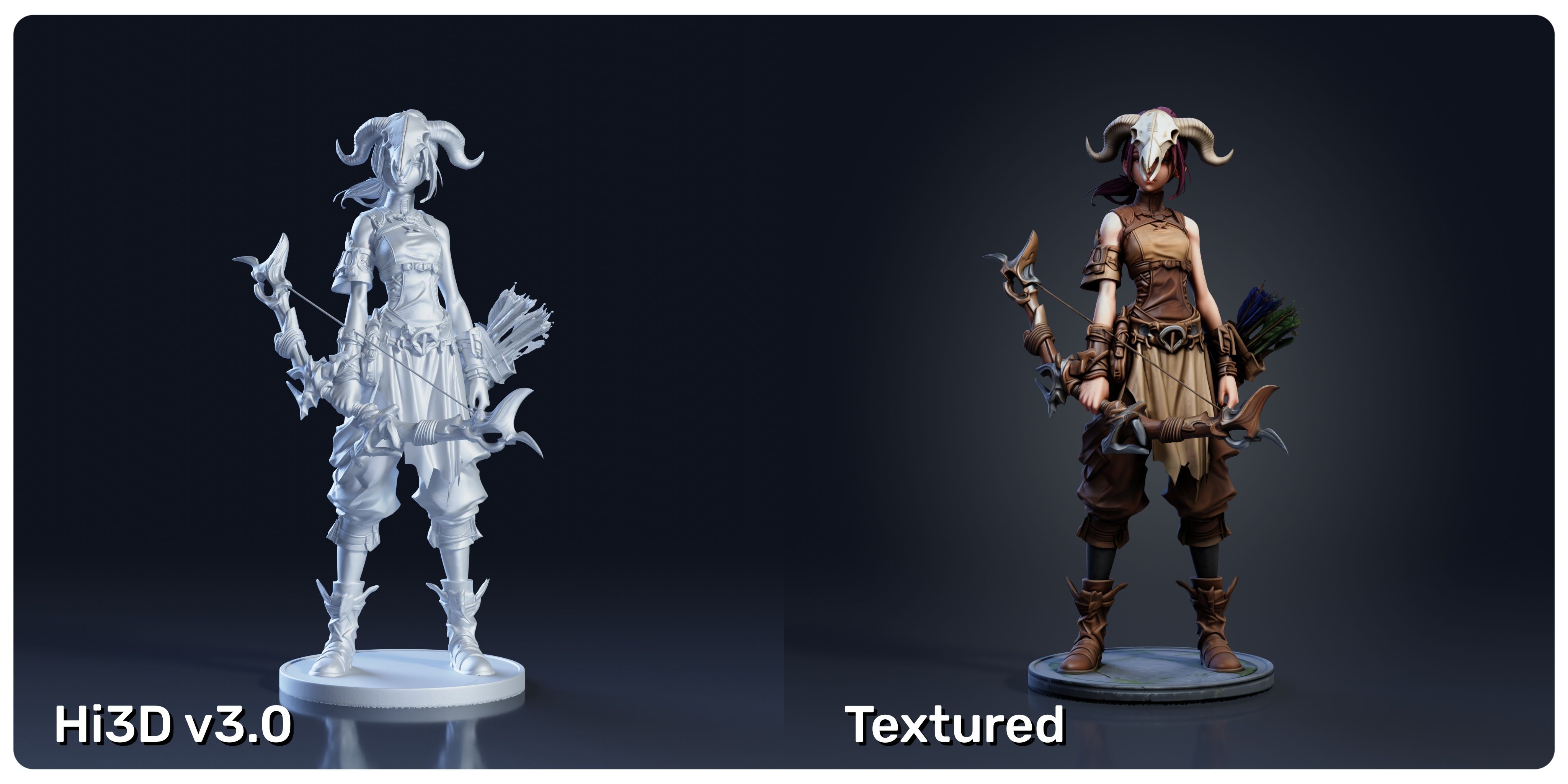
Separate photographic realism from geometric accuracy. A good texture can preserve skin color and material appearance while the underlying nose, fingers, or clothing folds remain wrong. Inspect both the textured view and the plain mesh.
Look at occlusion before surface polish. The difficult question is not whether the visible eye looks sharp. It is whether the generator builds a believable hand behind the weapon and a coherent body behind layered clothing.
Best 3D Model Generator from Photo or Image: 5 Tools
Below, we introduce six services that can build a 3D model from a photo or image. The comparison covers usability, free access, core functions, current price, and the jobs each platform handles best before moving into the detailed reviews.
| Tool | Ease of Use | Free Trial | Main Features | Price | Best For |
|---|---|---|---|---|---|
| Hi3D | Easy | Yes; 100 lifetime credits | Image and multi-view to 3D, Hi3D 3.0, up-to-8K textures, relief, Split-to-Print, multicolor printing, API | Free $0; Pro $19.90/mo; Max $39.90/mo; Ultra $129.90/mo. Current annual promotion: $71.64/$143.64/$467.64 | High-fidelity image-to-3D and printing |
| Meshy | Very easy | Yes; 100 credits/mo, but new Free models cannot be downloaded | Text, image, and multi-view to 3D, texturing, remesh, rigging, animation, plugins, API | Free $0; Pro $20/mo; Premium $40/mo; Ultra $100/mo; Studio $70/seat/mo; Enterprise custom | Game assets, textures, and animation |
| Tripo AI | Easy | Yes; 200 credits/mo | Text, image, and multi-view to 3D, Smart Mesh, segmentation, up-to-8K textures, rigging, DCC Bridge | Free $0; Pro $19.90/mo or $238.80/yr; Max $89.90/mo or $1,078.80/yr; Team $109.90/mo/seat or $54.95/mo/seat billed annually | Multi-view assets and rigging |
| Neural4D | Easy | Yes | Text/image to 3D, PBR, texturing, remesh, animation, API, common exports | Homepage: Free; Go $9.90 first month/$19.90 renewal; Plus $19.90/$39.90; Pro $49.90/$99.90. Verify checkout because the pricing page still shows older plans | Low-cost mesh experiments |
| Hyper3D | Easy | Yes; preview before confirmation | Rodin image/text/multi-image to 3D, Smart Low-Poly, HD textures, normal baking, plugins, API | Free $0; direct credits $1.50 each; Creator $30/mo or $288/yr; Business $120/mo or $1,152/yr; Enterprise custom | Pay-by-result Rodin generation |
Hi3D
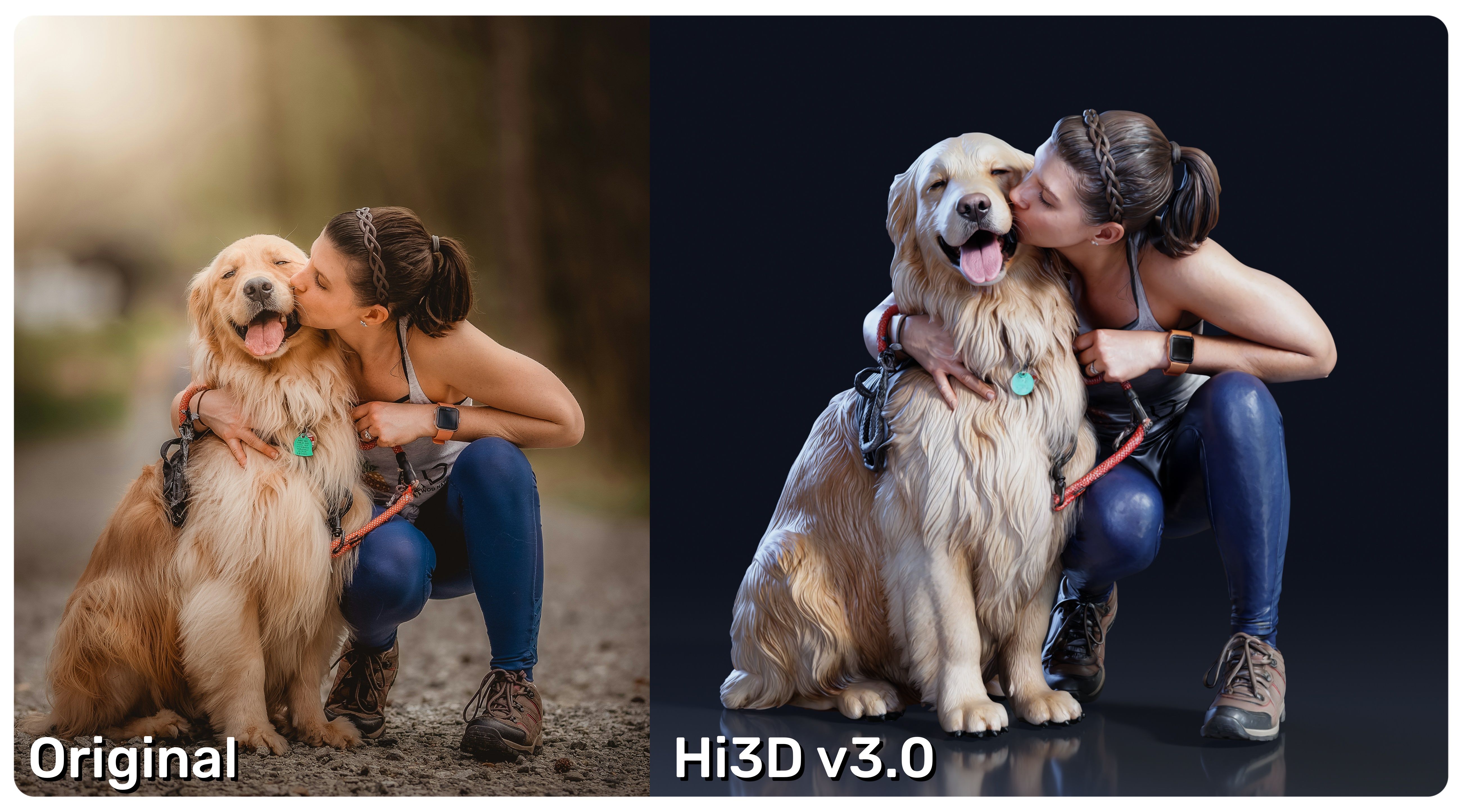
Hi3D is the strongest choice here when the photograph or illustration contains small sculptural detail. Its current workflow supports single-image and multi-view reconstruction, separate geometry and texture choices, Hi3D 3.0 quality modes, and tools for turning a digital result into printable parts.
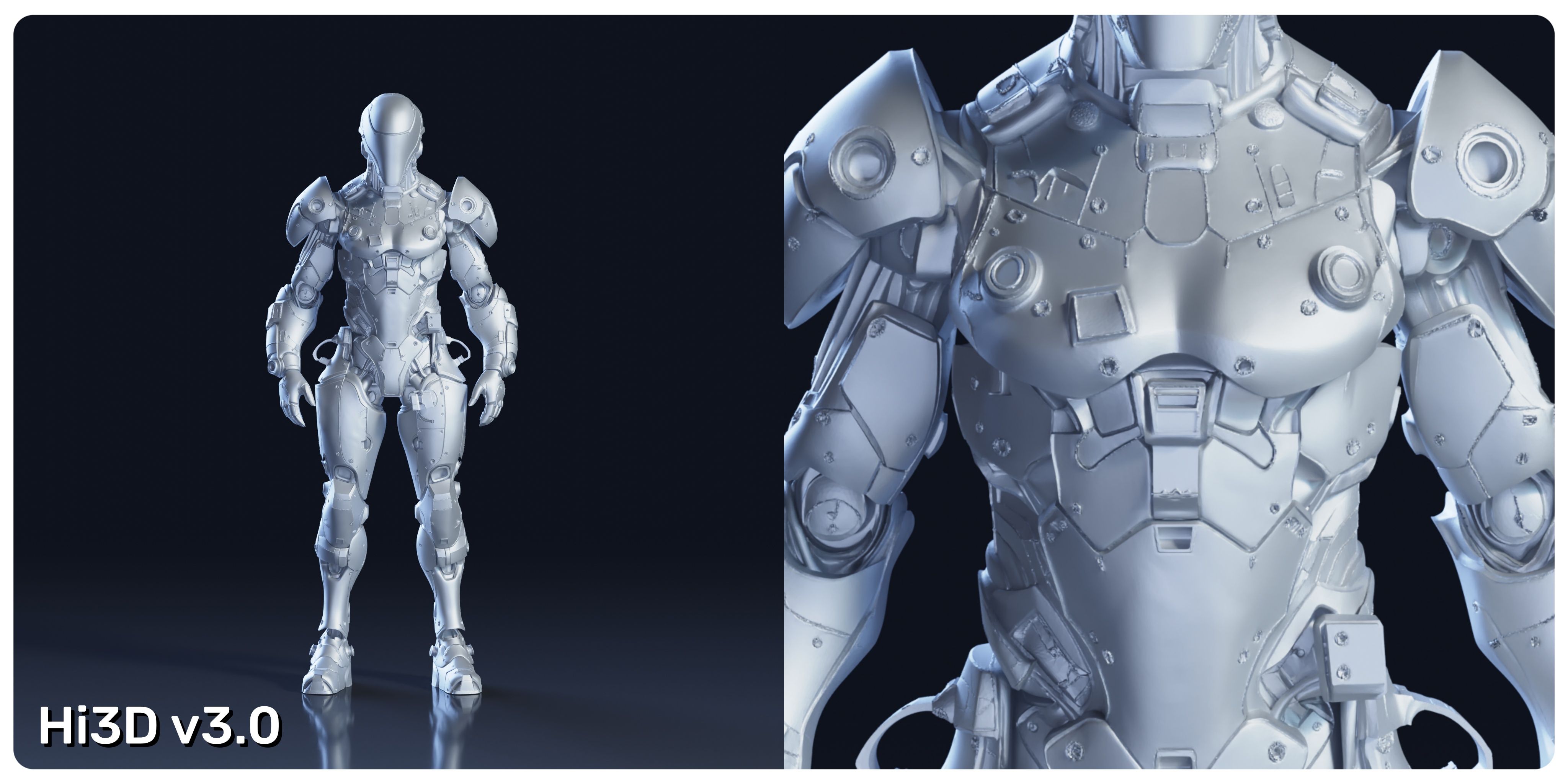
The latest Hi3D 3.0 model reaches 2048³ voxel-level geometry, according to Hi3D. In practical terms, it is designed for the parts that tend to disappear first: engraved text, ornamental patterns, layered hair, and small sculptural details. Hi3D also describes cross-view structural reasoning for occluded areas and textures up to 8K. Those specifications belong to Hi3D 3.0, not every older model or mode on the platform.
In our supplied comparison, Hi3D came closest to a one-to-one reconstruction. The facial contour remained recognizable, individual feather layers kept their texture, the armor scales stayed distinct, and even the cracks around the base survived. Calling any single-image conversion literally 100% accurate would be too strong, but visually this was the only result that retained nearly every signature detail we were checking.
The workflow after generation is another reason it ranks first. Split-to-Print can divide a large model into printable parts, while the multicolor workflow helps turn a textured asset into a physical color plan. You still need to check wall thickness, connector clearance, scale, and manifold geometry before printing. Hi3D is a shortcut to a strong starting point, not a replacement for engineering validation.
- Price: Free includes 100 lifetime credits. Pro, Max, and Ultra include 1,000, 2,400, and 8,000 monthly credits. Free assets are public under a CC BY 4.0 license; paid plans add private commercial assets and broader downloads.
- Pros:
- Best visible detail retention in the supplied comparison.
- Hi3D 3.0 combines 2048³ geometry, occlusion reasoning, and up-to-8K textures.
- Generation, printable-part splitting, and multicolor preparation live in one workflow.
- The interface is approachable enough for beginners without removing advanced quality choices.
- Cons:
- The Free allowance is lifetime rather than monthly.
- Subscription credits reset instead of rolling over.
- Master-quality generations can use substantially more credits than a quick draft.
- Precision parts still require manual inspection or CAD work.
Tripo AI—Best for Multi-View Models and Rigging
Tripo AI sits in a useful middle ground. It is quick to learn, but it also offers multi-view generation, Smart Mesh, segmentation, retopology, rigging, animation, and bridges to tools such as Blender, Maya, Unity, Unreal, and ZBrush. If you already know where the asset is going next, those connections save time.
Its output was the strongest alternative to Hi3D in our visual test. The overall character and facial expression stayed consistent, and the form looked coherent at normal viewing size. Zooming in revealed the compromise: several original patterns and fine surface lines were simplified or missing.
The Free plan gives 200 monthly credits, but models are public, non-commercial, and subject to limited storage and exports. Pro is reasonably priced for individual creators; the jump from Pro to Max is much steeper.
- Pros:
- Good balance of speed, visible fidelity, and production tools.
- Multi-view input reduces guesswork around the back and sides.
- Built-in segmentation, rigging, and animation cover common character tasks.
- DCC Bridge supports a long list of creative applications.
- Cons:
- Free output is public and restricted to non-commercial use.
- The Max plan is expensive for occasional creators.
- Credit consumption varies with the selected feature and quality level.
- The plan comparison is dense enough to require careful reading.
Meshy
Meshy is probably the easiest platform here to understand on the first visit. You can move from a text prompt or image to a model, then remesh, texture, rig, animate, or send the asset through one of its integrations. For an indie game team that needs a lot of props rather than one hero sculpture, that breadth is genuinely useful.
The test result was acceptable at silhouette level, but the close-up did not hold. The expression changed, the feather grooves blurred into broader shapes, and the armor’s surface design never really made it into the mesh. That makes Meshy a better fit for fast asset production than for a faithful collectible based on a complex illustration.
Its Free plan refreshes 100 credits each month, which sounds generous until you reach the export stage: newly generated Free models cannot be downloaded. Paid plans unlock unlimited downloads, private assets, commercial rights, multi-view input, and API access.
- Pros:
- Clean, beginner-friendly interface with a quick first result.
- Strong collection of texturing, remeshing, rigging, and animation tools.
- Useful Blender, Unity, and printing integrations.
- Monthly Free credits are good for continued experimentation.
- Cons:
- Free users cannot download newly generated models.
- The credit cost changes by model version and operation.
- Monthly credits do not roll over.
- Some of the most useful production features require Pro or higher.
- Best for: Game developers, animators, and creators who value speed and ecosystem coverage more than exact image matching.
Hyper3D
Hyper3D is built around Rodin and gives creators a useful bit of control before spending: you can preview a result, then confirm the credit charge. It supports image, text, and multi-image generation, plus Smart Low-Poly, HD or custom textures, baked normals, polygon controls, plugins, and API access on the Business plan.
Our test exposed the biggest structural failure in the group. The weapon changed direction and an arm disappeared, which altered the relationship between the character and the object it was holding. A second view might help with that kind of ambiguity, but the supplied result was too far from the reference to recommend for this particular image.
Hyper3D makes more sense when you like Rodin’s look, want to review before confirming payment, or need its low-poly and texture controls. Direct credits cost $1.50 each, so occasional generations can become expensive surprisingly quickly.
- Pros:
- Preview-before-confirmation reduces the risk of spending on an obviously bad result.
- Multi-image input can clarify hidden or overlapping structures.
- Strong low-poly, normal-baking, and texture controls.
- Creator and Business plans include private assets and broad usage rights.
- Cons:
- Direct credits are costly for repeated experimentation.
- Full API access requires the $120-per-month Business plan.
- The platform is less focused on print splitting and connector workflows.
- Its wider image, video, and avatar toolset may be unnecessary for 3D-only users.
- Best for: Rodin users, low-poly creators, and people who prefer previewing a result before committing credits.
Neural4D—Best for Low-Cost White-Mesh Experiments
Neural4D combines image-to-3D and text-to-3D with PBR materials, texturing, remeshing, motion tools, animation, API access, and exports such as OBJ, FBX, GLB, USDZ, STL, and BLEND. It is attractive to hobbyists because the free access includes downloadable untextured geometry for personal use.
In the supplied comparison, the gap in finish was obvious. The face, outer contour, and small surface details looked softer and less controlled than the leading results. I would use it for testing a concept or checking whether an image can become a workable volume—not as my first choice for a detailed display model.
The more practical warning is pricing clarity. When checked, Neural4D’s current homepage listed Free, Go, Plus, and Pro monthly options, while its dedicated pricing page still showed an older 7-Day Pass and Pro structure. Check the final checkout price and included credits before subscribing.
- Pros:
- A free path to downloading an untextured personal-use mesh.
- Broad export support, including STL and BLEND.
- PBR, motion, animation, and API tools extend beyond basic generation.
- Entry pricing can suit short experiments.
- Cons:
- Free downloads are untextured and not intended for commercial use.
- Official pricing pages were inconsistent when checked.
- The product ecosystem and documentation feel less mature than Meshy or Tripo AI.
- There are fewer print-specific preparation tools than Hi3D offers.
Final Verdict: Best 3D Model Generator from Photo or Image
For a detailed 3D model from a photo or image, Hi3D is the tool I would test first. It was the most faithful to the supplied face, feathers, armor, and base, and its print workflow gives the output somewhere useful to go next. Use Tripo AI when several angles and rigging are central to the project, or Meshy when fast production and animation matter more than a near-exact match. Whichever platform you choose, improve the input before increasing the paid quality setting: clean the background, keep the whole subject in frame, and add consistent side or rear views when available.